
VRIL WHOLESALE
Green Coffee Quality Control and Traceability
Every Ethiopian lot is measured, checked at five points and documented from washing station to your roastery.
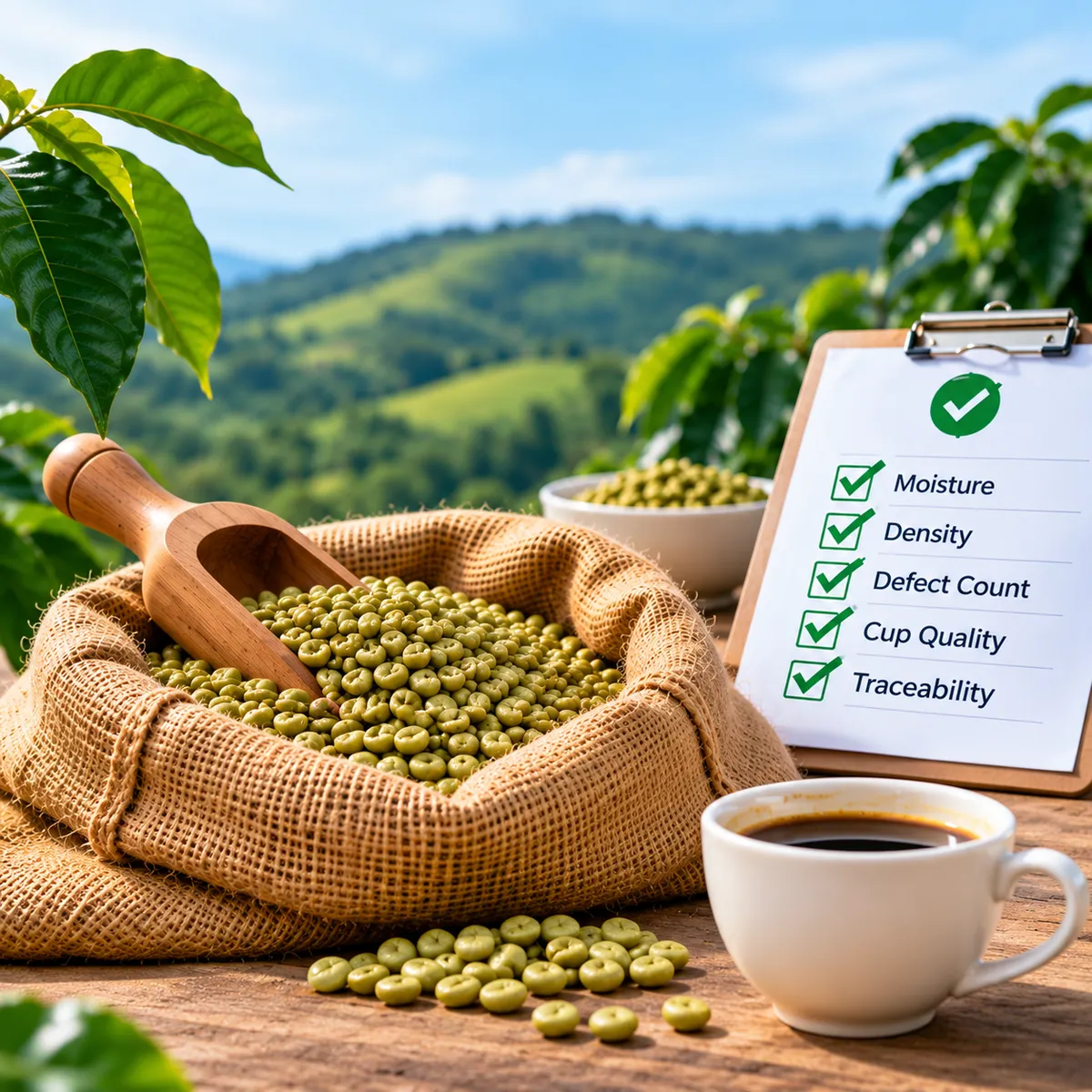
Green Coffee Quality Control Built Into Every Lot
Vril’s quality control process begins before a lot is offered and continues until it reaches your roastery. Every lot is measured against defined specifications, with results carefully recorded to ensure consistency. Our system protects the unique character of Ethiopian coffee by ensuring the sample you approve matches the coffee you receive, giving you reliable quality, stable roasting performance, and documented proof you can trust.
Five Checkpoints From Washing Station to Warehouse
Quality is checked at every stage where coffee can change.
1. Processing and drying. We confirm processing method and drying progress at the washing station, where most quality is won or lost.
2. Milling and export preparation. Sorting, grading and bagging are checked before the lot leaves Ethiopia.
3. Pre-shipment sampling. A pre-shipment sample is cupped and measured against the offer before the container ships.
4. Arrival in the U.S. The lot is sampled again on arrival and cupped against the pre-shipment result.
5. Warehouse storage. Stored coffee is monitored so the last bag performs like the first.


What Happens When a Lot Falls Outside Tolerance
When a checkpoint falls outside tolerance, Vril immediately reviews and corrects the issue or removes the lot from supply. We stand behind every purchase with replacement, credit, or buy-back when contracted quality or delivery terms are not met. Our traceability system tracks every lot from the washing station through export and U.S. warehousing, ensuring complete transparency and reliable documentation.
Every purchase is supported by a full record set:
Certificate of Analysis: Measured specifications for your lot.
Arrival Cupping Notes: Quality and cup profile upon arrival in the U.S.
Processing Records: Processing and drying details from origin.
Organic and NOP Documentation: Certification records where applicable.
Traceability Summary: The lot’s journey from washing station to warehouse.
These records support your quality files, audits, certification requirements, and product claims.
What We Measure on Every Lot
Each lot is tested against five key specifications before being offered and again upon arrival. These include moisture content to assess drying and roast performance, water activity to evaluate storage stability, defect counts to ensure cleanliness, screen distribution to maintain bean size uniformity, and cup profile alignment to confirm the coffee matches the agreed specifications and offer sheet.
Green Coffee Moisture Content
Moisture content shows how well the coffee was dried at origin. Coffee that is too wet risks mold and fast fading, while coffee that is too dry roasts quickly and loses sweetness.
Most specialty buyers look for moisture in the 10 to 12 percent range. We record the reading at origin and again on arrival.
Water Activity in Green Coffee
Water activity measures how much free water is available inside the bean. It is a strong signal of how long a lot will hold its flavor in storage.
Two lots can share the same moisture reading and still age differently. That is why we track both numbers on every lot.
Defect Counts
Defects are graded on a standard 350 gram sample. We count primary and secondary defects such as insect damage, broken beans, black beans and foreign matter.
A low defect count means cleaner cups and less hand sorting on your side.
Screen Distribution
Screen size is measured in 64ths of an inch. A tight screen distribution means beans of similar size, which roast more evenly in the same batch.
We report the distribution so you can plan charge weights and roast curves with confidence.
Cup Profile Alignment
Every lot is cupped and compared to its defined profile. A washed Yirgacheffe should read floral and citrus, and a Harrar natural should carry fruit and mocha depth.
If the cup drifts from the agreed profile, the lot does not move forward.
Built on Scientific Discipline
Vril was founded by a specialist in analytical chemistry and advanced clinical medicine. In both fields, results are only as good as the measurement and documentation behind them.
We apply the same discipline to Ethiopian coffee. Clear specifications, repeatable checks and complete records turn an exceptional origin into a dependable one.
Frequently Asked Questions
What is green coffee quality control?
Green coffee quality control is the process of measuring unroasted coffee against set specifications before it is sold. It covers moisture, water activity, defects, bean size and cup profile, checked at several stages from origin to warehouse.
What moisture content should green coffee have?
Most specialty buyers look for green coffee moisture between 10 and 12 percent. Coffee outside that range can roast unevenly or lose flavor faster in storage. Vril records moisture at origin and on arrival.
Why does water activity matter in green coffee?
Water activity shows how much free water is available in the bean, which affects how quickly it ages. Tracking it alongside moisture gives a clearer picture of how long a lot will hold its flavor.
What is a Certificate of Analysis for green coffee?
A Certificate of Analysis is a document listing the measured specifications of a specific lot. It gives roasters a written record of moisture, water activity, defects and screen size for their files.
How is Ethiopian coffee traced back to origin?
Vril tracks each lot from the washing station through milling, export and U.S. warehousing. A traceability summary records the region, washing station, processing method and handling path.
What if the coffee I receive does not match my sample?
Every lot is cupped on arrival against its pre-shipment result. If a purchased lot misses its contracted specifications, Vril offers replacement, credit or buy-back.
Green Coffee Quality Control You Can Verify
Our green coffee quality control gives you measured specifications, five checkpoints and a full record set on every Ethiopian lot. Request samples and review the numbers yourself.
Based in Los Angeles, California. Serving specialty roasters across the United States.
@vrilwholesale


© 2026 Vril Wholesale Coffee | All Rights Reserved.
Quick Links